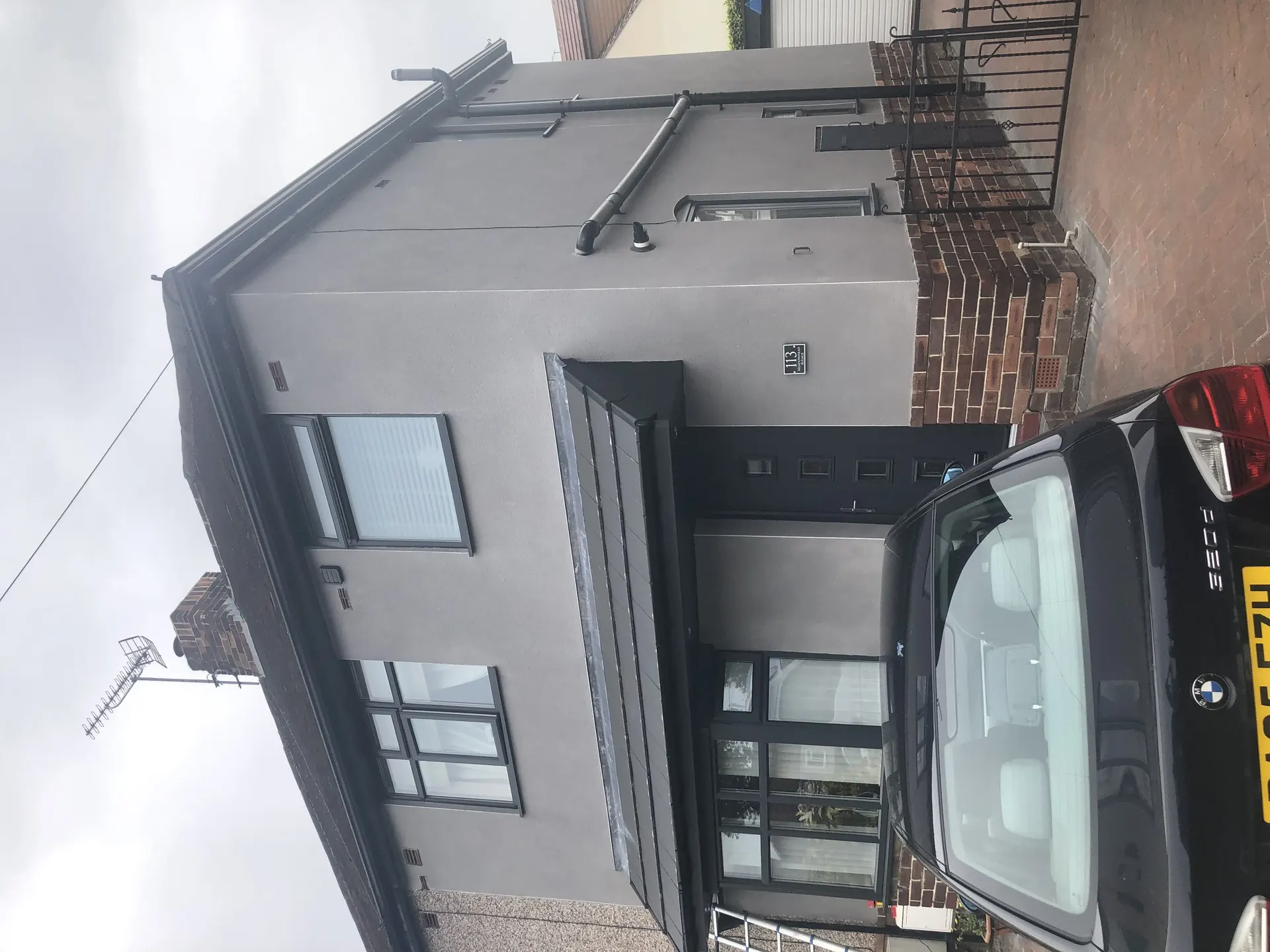
Sand & Cement
Rendering
Sheffield.
Traditional two-coat sand and cement render, pebble dash removal, re-render and repair. Matched to original specifications on older Sheffield properties, or replaced with modern silicone render when a lower-maintenance finish is preferred.
Sand and cement render is the traditional two-coat, site-mixed render — cement, sharp sand and lime — applied directly to masonry. It's the durable, cost-effective choice for matching existing render and for Sheffield conservation areas and listed buildings where modern thin-coat systems aren't permitted. It can be finished smooth, sponge-floated, tyrolean or pebble-dashed. Free survey, no deposit.
What Customers Say About Wall Rendering
Verified reviews from our Yell profile. Garden walls, garage walls and boundary walls are the everyday sand & cement jobs — here is how they went.
“Chris did a great job rendering the wall along my driveway.Unfortunately just as he finished work & was about to leave there was sudden heavy rain fall (earlier on it was a warm sunny day). Due to heavy rain all the work done was a complete washout. By the time rain settled it was late evening & dark with not much light and it was such a mess with cement everywhere.Chris was exhausted after busy long day & he had season tickets to take his lads to football match that evening.I asked him to return back next day but he said NO it cannot be allowed to dry in that condition & had to be finished then & there.He cancelled his plans to go to football match, stayed back & re-rendered the wall again using light from the car headlights.It was 9.30 pm by the time he could finish. He has done such an amazing job & is a thorough professional.I was left speechless with the effort he has put in.All my neighbours have complimented that the wall looks great! I would definitely recommend Chris.”
“I have no hesitation in recommending Plaster Solutions. The workmanship is excellent and the costs are very resonable. Chris is couteous and very reliable and works very hard to ensure that the work is completed on time and that all mess is cleaned up before he leaves site.”
“a good job well done,prompt and ensured we were well informed at all times, would recommend to any one”
What is Sand & Cement Render?
Sand and cement render is the traditional render system used on Sheffield properties built from the Victorian era through to the 1970s. It is a site-mixed material — cement, sharp sand and a small proportion of lime — applied in two coats directly to the masonry substrate. The first coat, the scratch coat, is applied and scored to create a mechanical key. The second coat, the float coat, is trowelled or sponge-floated to the finished surface.
The finished surface can be left smooth and painted, sponge-floated for a fine texture, tyrolean-finished for a rough textured look, or dressed with pebble aggregate for a traditional roughcast or pebble dash appearance. In conservation areas and on listed buildings across Sheffield, sand and cement render is often the only permitted system — planners require new render to match the character and material of the original.
Modern polymer-modified silicone and acrylic renders have largely replaced sand and cement on general residential work because they are more flexible, require no painting and are easier to apply consistently. However, sand and cement remains the right choice for matching existing render, working on properties where planning conditions restrict modern systems, and for some commercial and agricultural applications.
Strip existing render back to the masonry, repair the substrate, apply a new two-coat sand and cement system or upgrade to silicone render for a lower-maintenance finish.
Hack off the old pebble dash, assess and repair the masonry beneath, then apply the render system of your choice — matched sand cement or modern silicone.
Cut out failed areas, key the substrate and fill with matching material. Best for isolated failures — we assess the full elevation first to ensure patches won't stand out.
Lime-based sand cement mixes for historic properties. We can match the original render specification and work to planning conditions on listed buildings in Sheffield's conservation areas.
Sand Cement vs Silicone Render
We will advise at the survey which system is right for your property, taking into account the wall construction, any planning restrictions, and the finish you want to achieve.
Sand & Cement Render FAQ
Sand and cement render is a traditional two-coat render system made from a mix of sand, cement and lime. The scratch coat is applied first to the wall and keyed — then the float coat goes on top to form the finished surface. It can be left smooth, textured with a sponge float, or roughcast for an exposed aggregate finish. Sand and cement render is most commonly specified on older properties where it matches the original render specification, or where a heavier, harder finish is required. For new builds and modern refurbishments, polymer-modified silicone or acrylic renders are generally preferred due to their greater flexibility and lower maintenance.
Yes — pebble dash removal and re-render is one of the most common jobs we carry out in Sheffield. The pebble dash is hacked off down to the masonry substrate, which is then inspected for any loose, soft or cracked areas that need cutting back and making good. Once the substrate is sound, we apply a new render system — either a traditional sand and cement float and set, or a modern silicone or monocouche render if the customer prefers a lower-maintenance finish. We advise on the best option for the wall construction and the finish you want to achieve at the survey stage.
Sand and cement render is a rigid, traditional system made on-site from raw materials. It is hard-wearing and can be painted or left natural, but it is relatively brittle — minor movement in the wall can cause hairline cracks over time. Silicone render is a factory-produced polymer-modified system that is flexible, crack-resistant and hydrophobic. It requires less maintenance, stays cleaner for longer, and does not need painting. For most Sheffield homeowners undertaking a re-render, silicone render is now the preferred choice. Sand and cement remains appropriate where planning conditions restrict modern finishes, where a traditional appearance is required, or for repairs to an existing cement render system.
A well-applied sand and cement render on a sound substrate typically lasts 15 to 25 years before it needs significant attention. Longevity depends on the quality of the original application, the condition of the substrate, and how well the render has been maintained — small cracks should be filled promptly before water gets behind the coat and causes further damage. In Sheffield's wet climate, renders that face south-west and take the prevailing rain tend to show wear sooner than sheltered elevations. Regular painting every 5 to 8 years helps protect the surface and extends the life of the render substantially.
We do both — and we will always assess at the survey stage whether repair or full replacement is the right call for your property. Small areas of cracked, hollow or delaminated render can often be cut out and made good with matching material without touching the rest of the elevation. Where render has failed across large areas, or where multiple patch repairs have created a patchwork appearance, a full strip and re-render is usually more cost-effective and provides a better long-term result. We carry out a full tap test across the elevation at survey stage to map out any hollow areas before making a recommendation.
Related Services
Free Survey & Quote
Across Sheffield
Whether you need traditional sand cement render matched to an existing finish, pebble dash removed and replaced, or advice on upgrading to a modern silicone system — we survey, advise and quote for free. No deposit required.