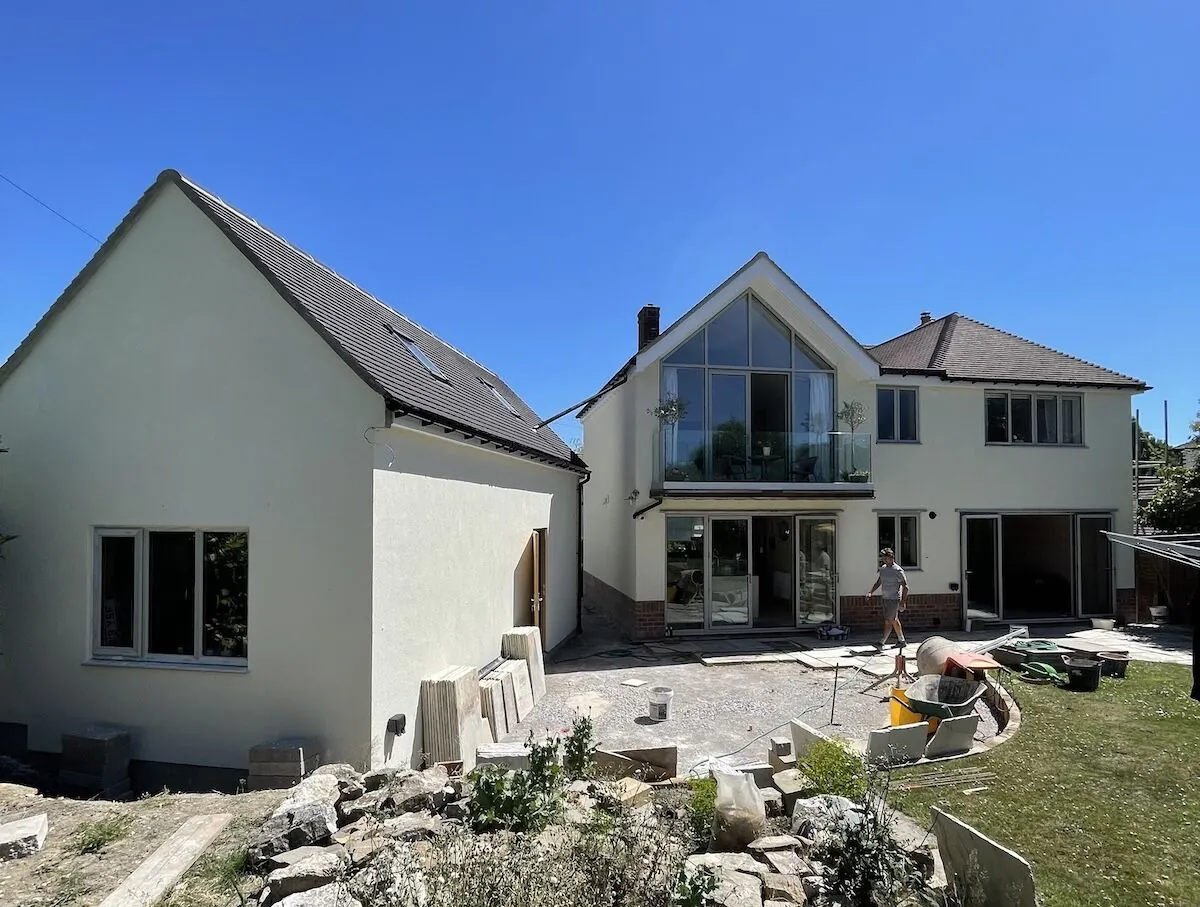
Yes, you can render in winter in Sheffield — but not with most products. Standard thin-coat and monocouche renders need above +5°C at application and through the cure. Ecorend SR365, which we are approved applicators for, is rated by the manufacturer from −5°C to +25°C, withstands humidity to 99%, and is rainproof within two hours above +5°C. What we will never do, with any system, is render into a frost.
Why cold is a problem at all
Render does not simply dry. It cures — a chemical reaction that needs water, and needs it to stay liquid. If the water in a fresh coat freezes before that reaction has finished, ice expands inside the render and disrupts its structure from within.
The result is render that is weakened, crazed, or debonded from the wall, and the cruel part is that it often looks acceptable at the time. The damage shows up in spring, by which point the scaffolding is long gone. That is why the temperature limits exist, and why we hold to them even when a customer is keen to get finished before Christmas.
The normal rule: +5°C
For almost every render system on the market, +5°C is the floor — at application and for the cure period afterwards, not just at the moment the first coat goes on. Combine that with a Sheffield November and you can see why most renderers simply stop for the winter and rebook everyone for spring.
The exception: Ecorend SR365
SR365 is a hybrid silicone thin coat render, and the manufacturer's stated figures are genuinely different from everything else:
- Temperature range −5°C to +25°C — the only system we use that goes below freezing
- Withstands humidity up to 99% — which matters as much as temperature on a damp, still Sheffield day
- Rainproof within 2 hours at temperatures above +5°C
- Six finishes: African Ivory, Antique White, Chalk White, Marble White, Portland Stone, Smoke Grey
Chris spraying Ecorend SR365 — the topcoat itself, going on in the cold. Filmed on a Sheffield job with the Predator Pro sprayer.
We are ecorend approved applicators, and this is the system we reach for when the forecast will not support anything else. It is not a trick or a way of pushing an ordinary render past its limits — it is a different product, formulated for it.
What we will refuse to do
This is the part worth reading, because it is the part that protects you.
- We will not render into a frost, or onto a frozen or saturated wall, whatever system we are using.
- We will not start if frost or heavy rain is forecast inside the cure window. We plan around the forecast rather than hoping.
- We will not push SR365 outside its rated range to make a date work. Below −5°C, nobody should be rendering.
If a contractor tells you the weather makes no difference, that should end the conversation. The risk is entirely yours — it is your wall that fails, and by then it is your problem to fund.
Cold weather changes the programme, not the quality
Curing slows as the temperature drops, so cure windows stretch and a winter job takes longer than the same work in July. That is normal and we programme for it. The two-hour rainproof figure for SR365 applies above +5°C; below that, allow longer.
What does not change is the finished result. Applied within its stated limits by someone watching the forecast, winter render performs exactly as summer render does. The life of a render comes from the system and the workmanship, not the month it went on.
Winter is the easy time to get booked in
Most renderers stop between November and March, so the queue disappears. We survey in winter exactly as we would in summer — free, no call-out charge, no deposit.
When we would tell you to wait
Not every job is a sensible winter job, and we will say so. A large elevation that needs extensive substrate repair first, in a spell of persistent frost, is better left. So is anything where the wall itself will not dry out enough to take a coat.
But if your render is already cracked or letting water in, waiting until spring means several more months of water getting behind it and doing damage that costs more to put right. Render repair is often the more urgent question than a full re-render.
Sheffield specifics
Sheffield sits high and wet, and the western suburbs sit higher still. A frost in Stannington or Stocksbridge can be a couple of degrees harder than the same night in the city centre, and it lingers longer on a north elevation that never sees sun. We look at aspect and altitude, not just the city forecast, when we plan a winter start.
If you are weighing up systems before the weather closes in, our silicone vs monocouche comparison and rendering cost guide cover the ground, and planning permission is worth settling early since that can add weeks.